You’re Not Too Old to Learn Spanish: Reclaiming Identity Through Language
Several years ago, I worked with a client—I’ll call her Ana—whose story has stayed with me ever since.
Ana was in her mid-40s.
A nonprofit founder.
A leader in her community.
And yet, during one of our sessions, something deeper surfaced.
As we were reading I Am Not Your Perfect Mexican Daughter in Spanish, the conversation shifted from language… to identity.
She became emotional—not because the learning wasn’t working, but because it was.
For the first time, she wasn’t just studying Spanish.
She was confronting what it meant to belong to it.
And then she said something I still think about to this day.
She shared that she felt a deep sadness—not because she couldn’t speak Spanish now, but because she felt like she should have been raised with it.
Her father spoke Spanish.
And yet, growing up, it wasn’t something she fully received, lived, or developed.
She wasn’t grieving a skill.
She was grieving an experience she felt she had missed.
That moment changed everything.
Because for Ana, learning Spanish wasn’t about conjugations or vocabulary lists.
It was about something deeper:
Reclaiming a part of herself.
Why Learning Spanish Is About Identity—Not Just Language
There’s a common belief that learning a language is purely academic.
It’s not.
Research in psycholinguistics shows that language is deeply connected to identity, memory, and emotion. The words we use don’t just communicate ideas—they shape how we experience the world and how we see ourselves within it.
Studies on bilingualism also describe something called “cultural frame switching”—the ability to access different perspectives, behaviors, and emotional expressions depending on the language being used.
In other words:
Learning Spanish doesn’t just add a skill.
It expands who you are.
“Am I Too Old to Learn Spanish?”
This is one of the most common questions I hear:
“I’m too old.”
“I’m too busy.”
“I’ve fallen too far behind.”
But neuroscience tells a different story.
Because of neuroplasticity, your brain remains capable of learning, adapting, and forming new connections throughout your entire life.
In fact, adult learners often have powerful advantages:
- Stronger discipline
- Clearer purpose
- Real-life context to attach meaning to what they learn
Ana wasn’t starting from zero.
She was starting from experience.
And that changed everything.
What Transformation Actually Looks Like
Ana didn’t become fluent overnight.
That’s not how meaningful change works.
Instead, it showed up in small but powerful ways:
- Expressing her work in social impact—in Spanish
- Understanding phrases that once felt out of reach
- Laughing through lessons about cultural nuance and everyday expression
Some days were emotional.
Some days were light and fun.
But every day, she was building something.
Not just skill.
Confidence. Ownership. Identity.
In my work, I’ve learned that when emotions come up, it’s not a sign something is going wrong—it’s a sign something real is happening.
Spanish as a Tool for Purpose and Impact
One of the biggest shifts I witnessed was this:
Ana stopped seeing Spanish as something she lacked…
and started seeing it as something she could use.
To connect more deeply.
To lead more effectively.
To expand her impact.
Research consistently shows that bilingual individuals often develop stronger communication skills, greater empathy, and increased ability to navigate multicultural environments.
But beyond the research, there’s something even more important:
Language gives you access.
Access to people.
Access to culture.
Access to parts of yourself you haven’t fully explored yet.
The Fear No One Talks About
Many adult learners carry a quiet fear:
“What if I can’t be myself in another language?”
At first, that feeling is real.
But over time, something shifts.
You don’t lose yourself.
You expand yourself.
You discover new ways to express humor, connection, and meaning.
Your voice doesn’t disappear.
It evolves.
It Was Never Too Late
Ana’s story is not rare.
It’s just rarely shared.
Because so many people believe they missed their opportunity.
But learning Spanish as an adult isn’t about catching up.
It’s about moving forward—with intention.
With meaning.
With purpose.
A Different Way to Learn Spanish
At Haku Spanish, the goal isn’t perfection.
It’s connection.
It’s understanding first—so speaking becomes natural, not forced.
It’s creating an environment where learning feels safe, human, and meaningful.
Because when you remove pressure…
you create space for real transformation.
Ready to Begin?
If you’ve been thinking about learning Spanish—or coming back to it—this is your reminder:
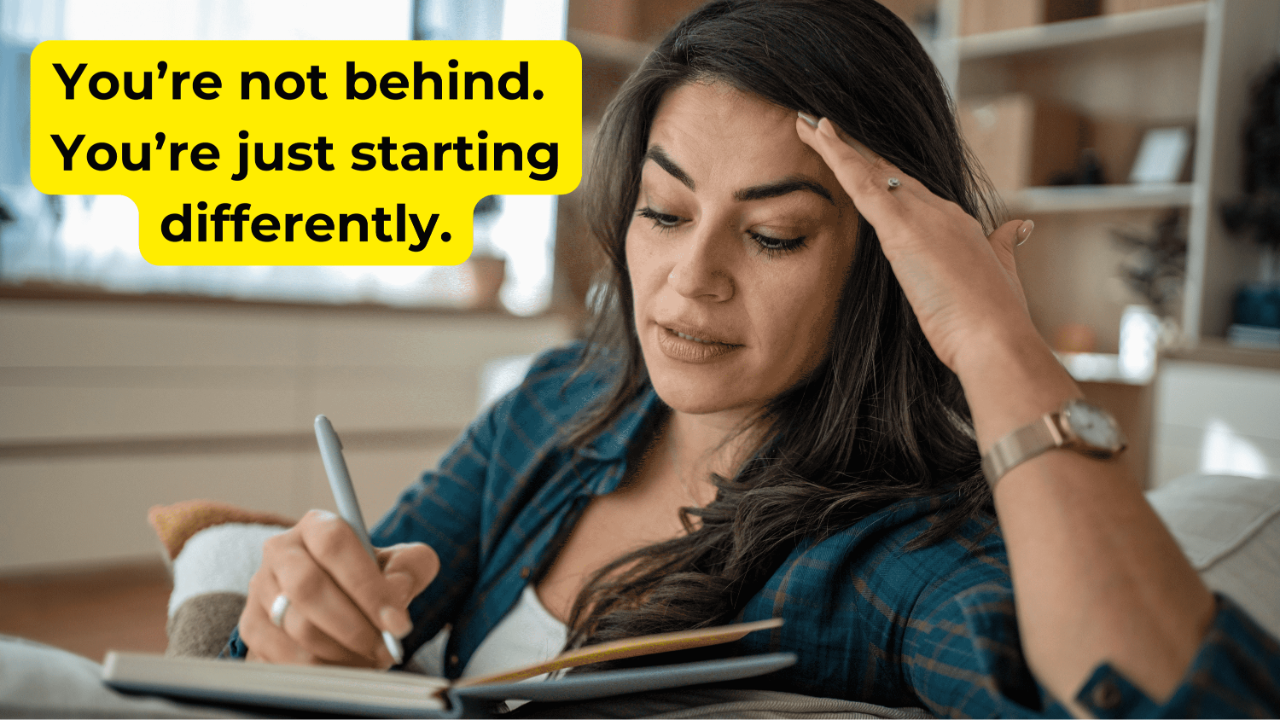
You are not behind.
You are not too old.
You are not starting from nothing.
You are starting from you.
And that’s more than enough.
If you’re ready for a different approach to learning Spanish—one that goes beyond apps and into real conversation, identity, and confidence—explore the Haku Spanish Fluency Program.
Haku. Let’s go.
Work With Me
If you're serious about developing Spanish fluency, my private coaching program may be the right next step.
The Haku Spanish Fluency Program is a personalized coaching experience designed for motivated adults who want to move beyond apps and finally communicate confidently in Spanish.
Through structured guidance and real conversation practice, you'll develop the skills needed to understand and speak Spanish naturally.