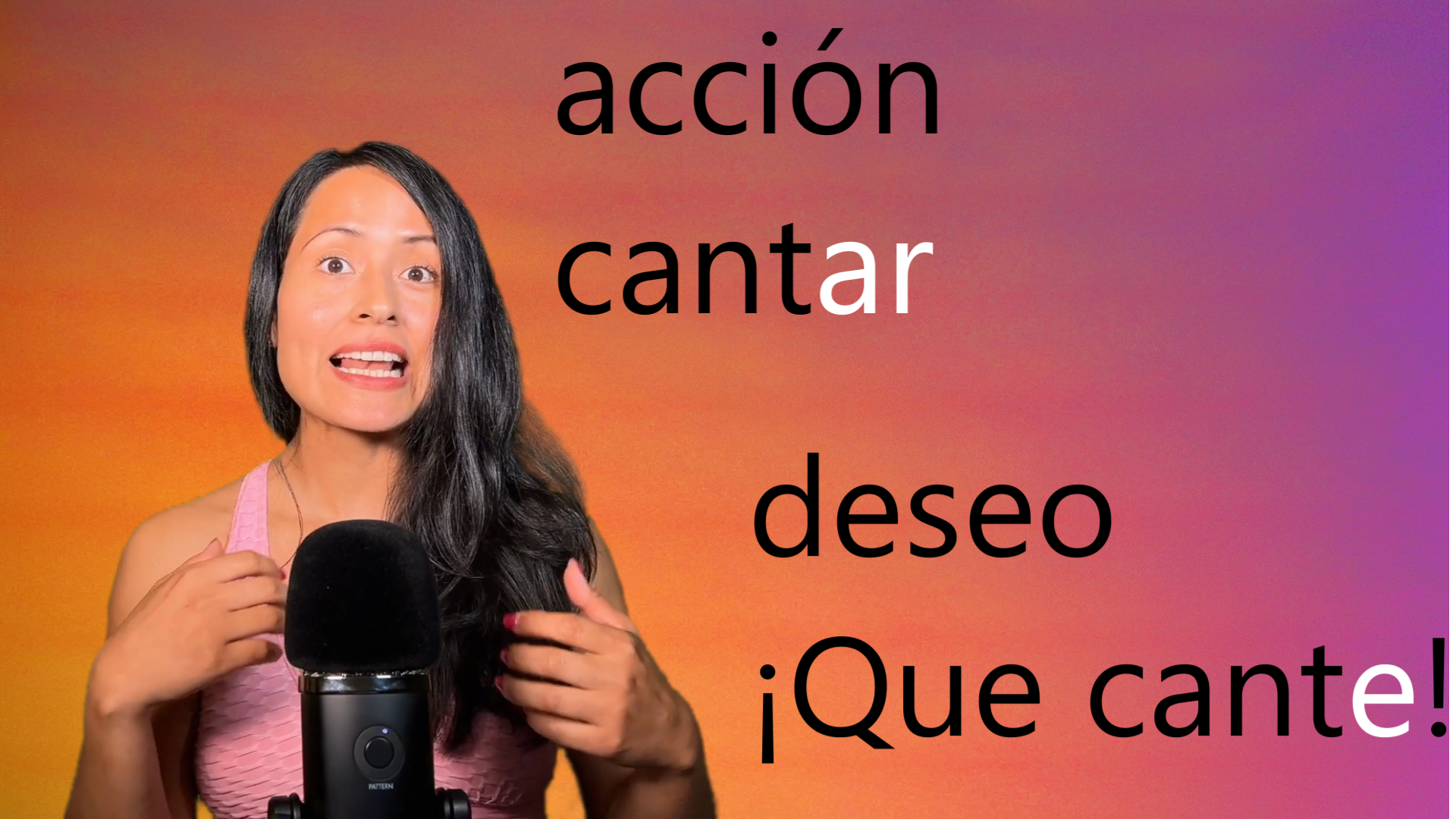
MEET GABRIELA HUALLANCA
Founder of Haku Spanish
Native Spanish speaker from Lima, Peru.
Professional language educator.
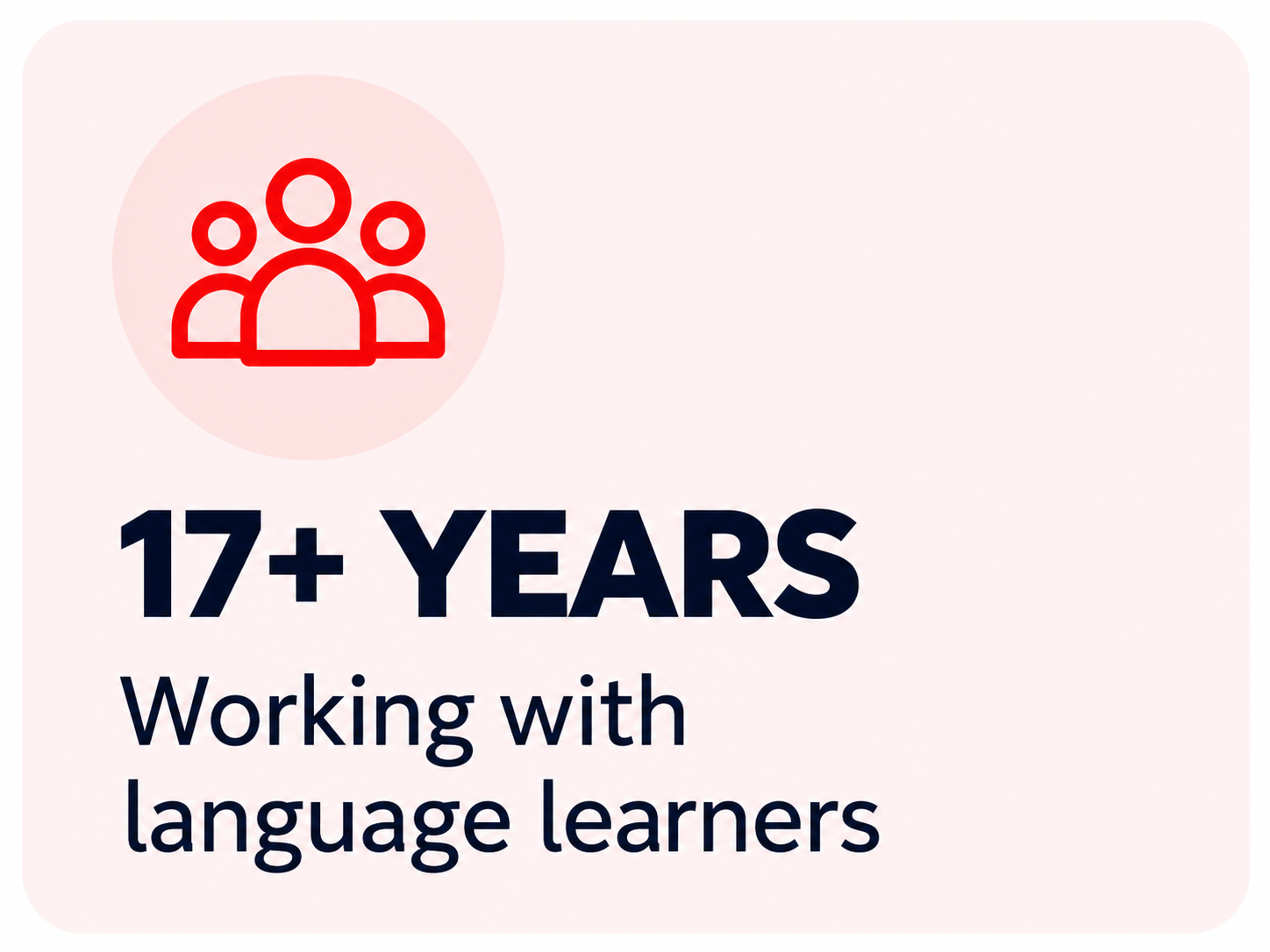
17+ years working with language learners.
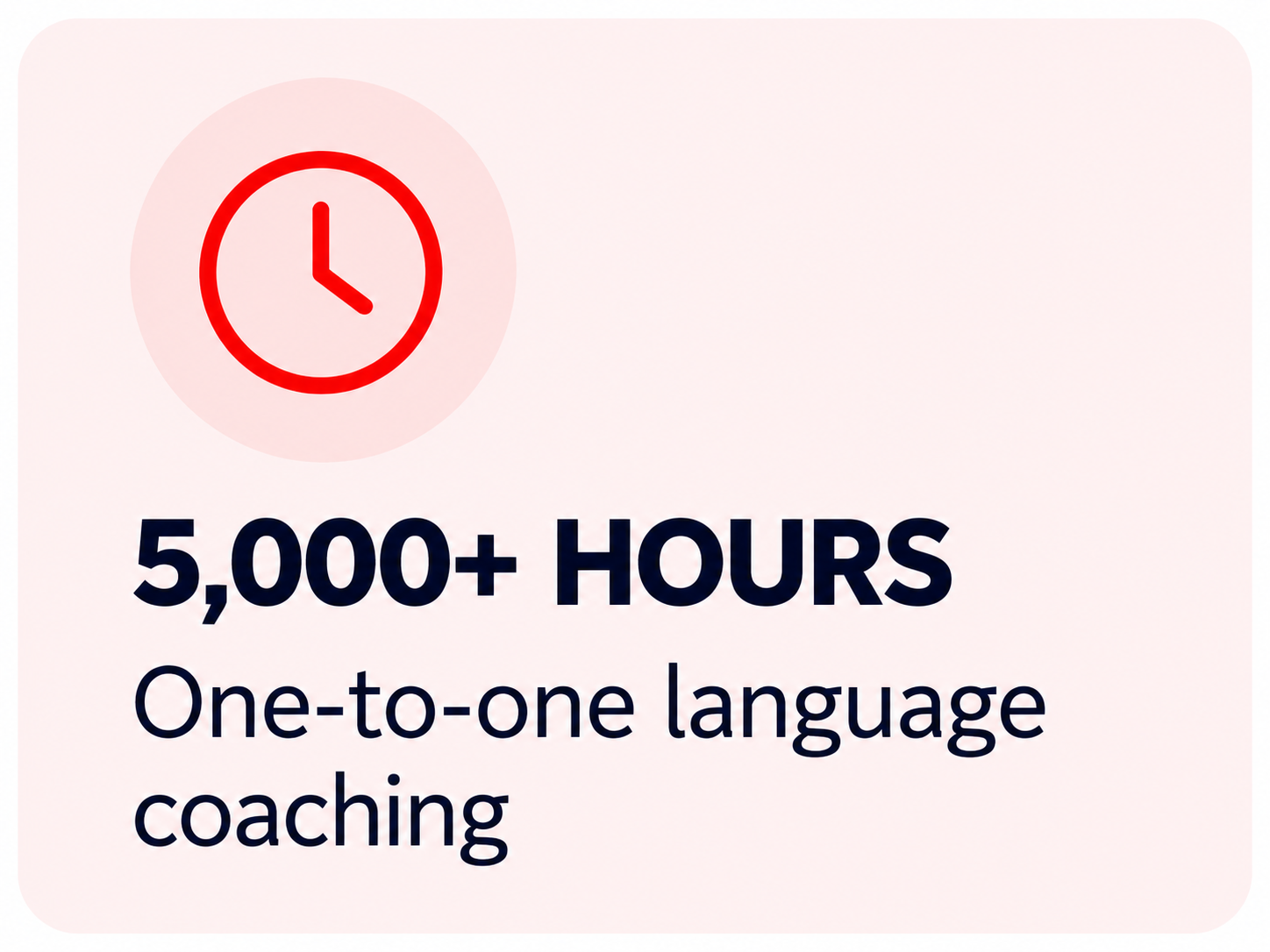
5,000+ hours of one-to-one language coaching.
Language has been at the center of my professional life for more than 17 years.
Over that time, I have worked with learners at very different stages and with very different reasons for learning. My work has included entrepreneurs, authors, doctors, lawyers, executives, and other professionals using language for work, travel, relationships, and everyday life.
I have taught in classrooms, worked extensively one-to-one, supported language for professional communication, and continued developing my own skills through interpreting.
But what has interested me most throughout all of it is not simply what people learn.
I have always been curious about what helps someone understand, what makes language stay with them, and what eventually allows them to use it when another person is actually waiting for a response.
That curiosity eventually became Haku Spanish.

BEFORE IT BECAME A CAREER
I was teaching long before I called myself a teacher.
Even when I was young, I was always helping classmates with whatever they were struggling with—whether it was math, chemistry, English, or even Spanish.
I genuinely enjoyed it.
I liked finding another way to explain something when it did not make sense the first time, and I loved seeing the moment it finally clicked for someone.
My educational journey began in Lima, where I attended Universidad Nacional Mayor de San Marcos, one of Peru's most historic universities. Later, I continued my education in the United States and earned my degree in Foreign Language Education.
For a while, I thought I might become a translator or interpreter. But I kept coming back to teaching because I realized I was most drawn to helping people understand, communicate, and become more confident in what they could do.
That interest in interpreting never disappeared.
From time to time, I still take on interpreting work because I enjoy the challenge and because it keeps my listening, language, and communication skills sharp. I am also pursuing federal court interpreter certification and have already completed and passed part of the required examination process.
Teaching eventually became my profession.
But after years of working closely with individual language learners, the way I wanted to support people began to evolve.
FROM TEACHER TO COACH
Why I call myself a coach.
I am still an educator at my core.
But over thousands of hours of working one-to-one with language learners, I realized that the work I wanted to do went beyond delivering a lesson.
I do not want to simply explain something, assign practice, and move on to the next topic.
I want to understand what you are trying to do with Spanish, what is getting in your way, what is already beginning to work, and what we should focus on next.
That means listening closely.
It means adapting as we go, revisiting something when it needs more time, challenging you when you are ready, and paying attention to what happens from one conversation to the next.
Sometimes the most important thing is not introducing something new at all.
It is recognizing what is already there and helping you make it easier to understand, retrieve, and use.
That is why I call myself a coach.
My role is not simply to teach you more Spanish.
It is to guide you through the process of making more of your Spanish available when you actually want to communicate.
INNOVATION IN LANGUAGE LEARNING
Why I created Haku Fluency Integration™
I’ve never been interested in teaching Spanish a certain way simply because that is how language lessons have traditionally been taught.
Long vocabulary lists, explicit grammar rules, and expressions a learner may never actually use have never made much sense to me as the center of the learning experience.
I have always been more interested in what happens when someone is actually trying to communicate.
What helps them understand?
What makes something become familiar?
What helps a word or phrase come back when they need it again?
So I test ideas. I observe. I adjust. And I keep what genuinely helps the learner move forward.
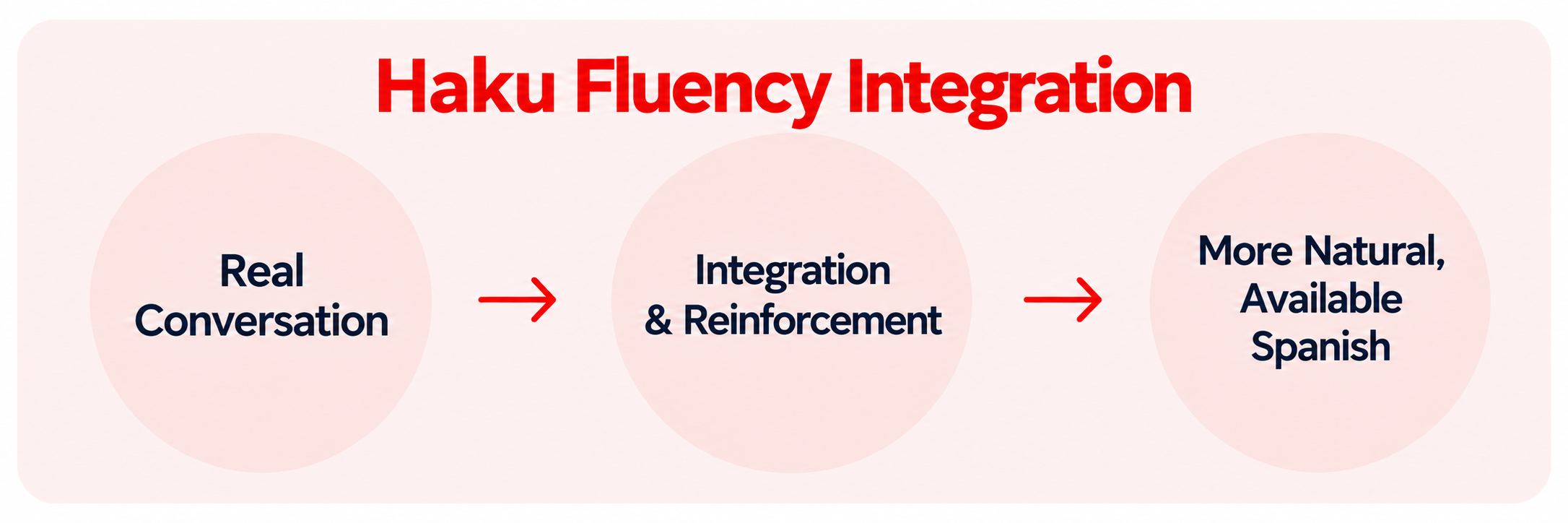
That thinking led me to create Haku Fluency Integration™.
I did not want something useful to appear once in a conversation and then be left behind when the session ended. I wanted important language to have opportunities to return—in new conversations, new contexts, listening, personalized reinforcement, and the learner’s own responses.
That repeated return is intentional. Each time language is understood, recognized, retrieved, and used again, the connection has another opportunity to become stronger.
For me, the goal has never been to help someone collect more Spanish. It is to help more of their Spanish become usable.
THE DIRECTION AHEAD
Haku Spanish is where the idea begins.
I created Haku Spanish around Spanish, but many of the questions that interest me extend beyond one language.
I am fascinated by how people learn to understand, recognize, retrieve, and use language when communication actually matters.
And I believe there is still a great deal of room to rethink how language-learning experiences are designed.
That is part of the direction I see for Haku.
I want to continue testing ideas, refining the Haku approach, and exploring new ways to make high-quality language learning more personalized, connected, and responsive to the individual.
I am particularly interested in the possibilities created by artificial intelligence.
I don't believe technology should replace meaningful human interaction. I think AI can eventually help us create better systems for personalization, practice, feedback, reinforcement, and continuity between conversations.
I am also interested in where the ideas behind Haku might eventually lead beyond Spanish.
I do not know exactly what every part of that future will look like yet—and I like that.
I want Haku to remain a place where I can keep asking questions, experimenting thoughtfully, and improving what we do as we learn more.
Whatever evolves, one principle will remain central:
Language exists so people can understand one another, express what they mean, and participate more fully in the world around them.
Technology should help us do more of that—not distract us from it.
A CAREER BUILT AROUND LANGUAGE & COMMUNICATION
Experience that continues to shape how I coach.
My approach today has been shaped by years of working with language from different perspectives—not only as a teacher, but as a learner, coach, communicator, and interpreter.
A LIFE OUTSIDE THE LESSON
A little more about me.
When I’m not thinking about language, I’m a mother of three, a reader, a podcast listener, and someone who loves to cook, work out, travel, and keep learning.
I especially enjoy self-development books and anything that helps me grow, both personally and professionally. I’m naturally curious, and I think that shows up in the way I work too. I’m always paying attention to what helps, what could be better, and what I still have to learn.
I don’t expect to ever reach a point where I know everything about teaching, coaching, language, or communication.
I would much rather keep paying attention.
I also love exploring new places and learning about different cultures. Some of my favorite moments are the simple ones that happen through language: a conversation while traveling, understanding something I could not understand before, or watching someone finally express an idea they had been trying to say.
Those moments are a constant reminder that language is not just something we study.
It is one of the ways we connect with people.
This version feels more like you to me because it keeps the personal details but removes some of the broader, more generic phrasing like “the power of communication to bring people closer.”
WHAT STILL DRIVES ME
I still love the moment something clicks.
After more than 17 years of teaching, that has not changed.
I still enjoy figuring out why something is not connecting, trying a different approach, and seeing someone suddenly understand or use something that once felt difficult.
That curiosity keeps me learning, questioning, and refining the way I work.
It is the same thing I loved when I was helping classmates years ago—and it is still at the heart of Haku today.
READY TO SEE WHAT THAT LOOKS LIKE IN PRACTICE?
The story continues in the work.
Haku Spanish brings together the experience, questions, observations, and ideas that have shaped the way I work with language learners today.
If the way I think about language learning resonates with you, you can explore what working together looks like inside the Haku Spanish Fluency Experience™.
Let's get Social!